
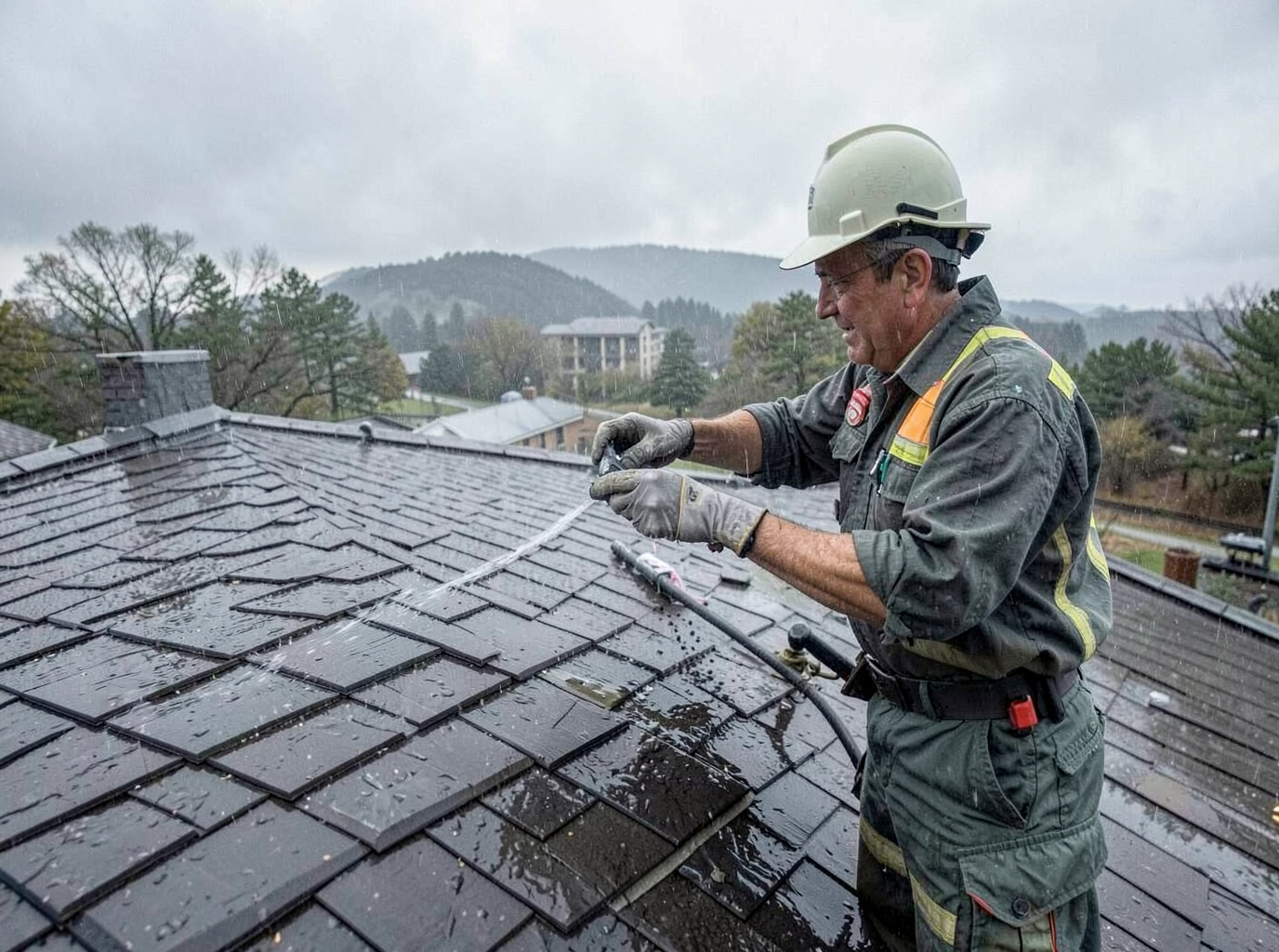
Ames sits in a humid continental climate where summer hail and high winds from storms moving up from Des Moines frequently hit asphalt shingle roofs on 1950s-1980s homes in North Ames and Gilbert Addition. After these events, crews check for granule loss, cracked seals around vents, and lifted tabs that allow water to reach the underlayment. Older homes near Iowa State University often have multiple layers, which complicates detection because damage hides between layers and can worsen during the first freeze-thaw cycle of winter.
Wind uplift commonly occurs along the south and west exposures in West Ames and Somerset because open fields allow gusts to build force before striking roof edges. Inspectors walk every slope, probe flashing at chimneys and skylights, and use binoculars on steep pitches common in Campustown rentals. They also examine attic insulation for wet spots that signal entry points missed from the ground. Municipal Pool and Bandshell Park areas see similar patterns after derechos that sweep through Story County.
Reiman Gardens greenhouses and nearby commercial buildings often use metal panels that dent rather than crack, requiring different evaluation than residential shingles. Post-storm checks include verifying that ridge vents remain sealed and that downspouts still direct water away from foundations on the flat lots typical in South Ames. Missing these details leads to ice dams once temperatures drop below freezing.
Homeowners in Boone and surrounding towns sometimes drive into Ames for inspections because local crews know how Story County soil movement affects older foundations and how that shifts roof planes over decades. The work focuses on visible evidence only, with notes on areas that will need monitoring through the next heavy snow load.
Technician insight
In Ames the thing that catches most people out with Roof Inspection After A Storm is how quickly a small hail dent turns into a leak once our first hard freeze hits and the shingle contracts. Homes built before 1980 in North Ames and near the university often have two layers, so damage hides until water reaches the second deck. Checking the attic right after the storm is the only way to catch it before snow load arrives.
Wind damage on a 1972 home in North Ames
A homeowner called after a June storm with branches down near Bandshell Park. We found lifted shingles along the west ridge and wet insulation above the kitchen. We documented the entry points and advised temporary tarping until the insurance adjuster arrived; the roof was repaired before the first winter freeze.
Roof Inspection After a Storm Services We Offer
✓Hail Damage Assessment
Walk the full roof surface to measure granule loss and dent patterns on asphalt shingles common throughout Ames after summer storms.
✓Wind Uplift Inspection
Check edge flashing, ridge vents and tab adhesion on homes in open exposures like West Ames where gusts from the south frequently lift shingles.
✓Ice Dam Entry Check
Examine attic insulation and roof deck for moisture that entered during a storm and will refreeze once Ames winter temperatures drop.
✓Flashing and Vent Seal Review
Inspect all chimney, skylight and pipe flashings on 1960s-1970s homes in North Ames and Gilbert Addition where sealants fail after wind-driven rain.
✓Multi-Layer Roof Evaluation
Assess older homes near Iowa State University that carry two or three shingle layers to locate hidden damage between courses.
Roof Inspection After a Storm Cost in Ames, IA
| Service | Typical Range | What Affects It |
|---|---|---|
| Single-story home inspection | $175–$275 | Easier access, typical in South Ames |
| Two-story or steep roof inspection | $250–$375 | Common in Campustown and near Reiman Gardens |
| Multi-layer roof inspection | $300–$450 | Older homes in North Ames and Gilbert Addition |
| Attic moisture evaluation add-on | $75–$125 | Included when access is safe |
Ranges are typical for Ames, IA and confirmed with an exact written quote before any work starts.
How it works
- 1
Schedule And Site Arrival
Book during business hours and arrive at the Ames address with ladder and safety gear to begin the exterior assessment.
- 2
Exterior Slope Walk
Traverse every accessible pitch, document hail hits, lifted tabs and flashing issues while noting exposure to prevailing winds.
- 3
Attic And Interior Check
Enter the attic to look for wet insulation or daylight at deck joints that indicate storm entry points.
- 4
Findings And Next Steps
Review results on site with the owner and outline which areas need monitoring or repair before the next freeze.
Pricing
Upfront quote given after the inspection based on roof size, access and number of layers.